
Credit in 2026: Complete Guide to Understanding, Building & Protecting Your Credit Score
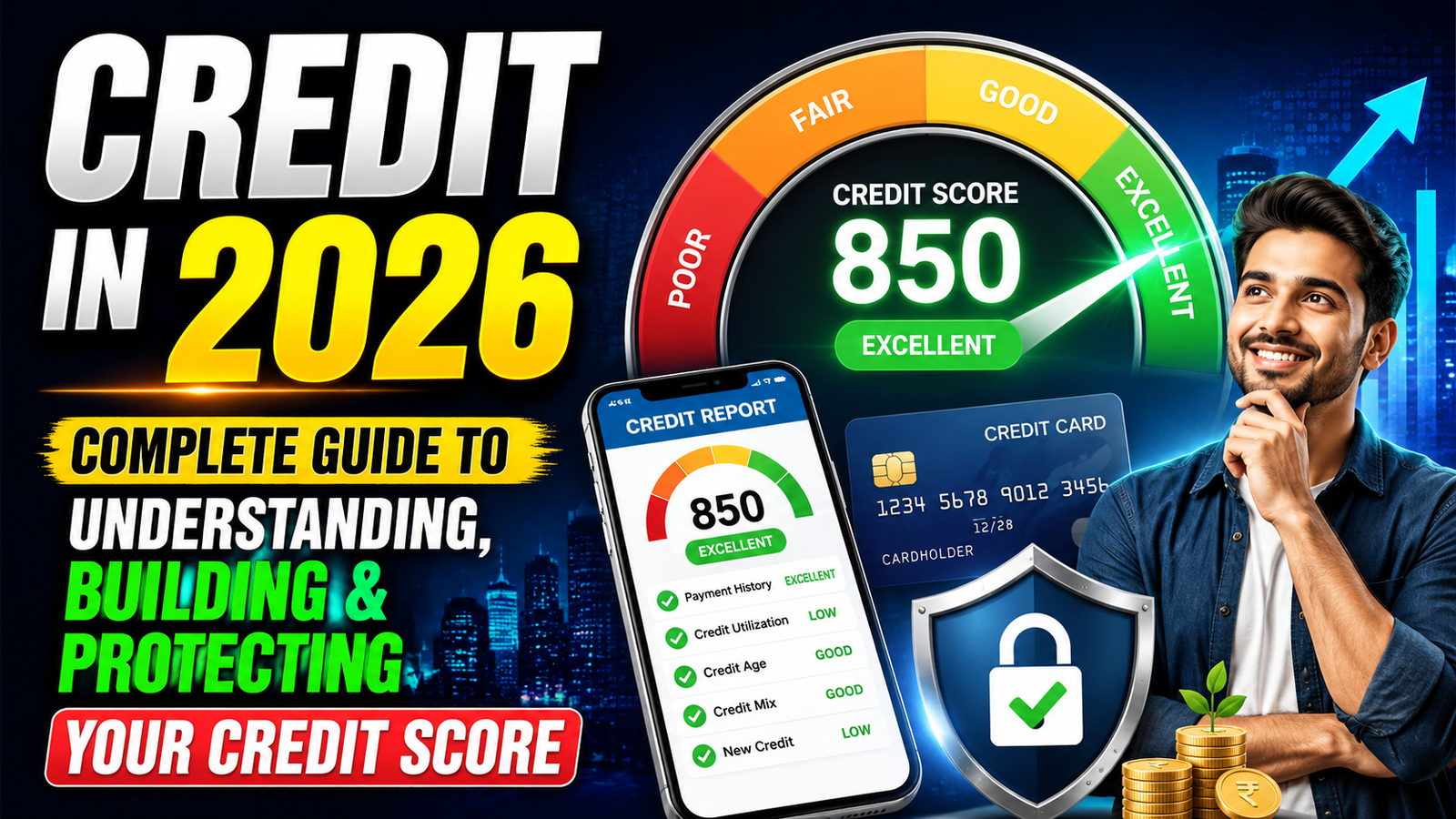
Your credit score is one of the most powerful three-digit numbers in your financial life — influencing your ability to rent an apartment, secure a mortgage, qualify for the best finance loans, obtain competitive insurance rates, and in some cases even land a job. In 2026, understanding and actively managing your credit profile is not optional for anyone serious about building long-term financial security and wealth. Yet despite its enormous importance, credit remains poorly understood by millions of people who pay thousands of dollars in unnecessary interest and missed opportunities as a result. This comprehensive credit score guide 2026 demystifies the credit system completely and gives you the practical strategies needed to build, repair, protect, and leverage excellent credit throughout your financial life.
📊 Understanding How Credit Scores Work
Your credit score is a numerical representation of your creditworthiness — essentially a measure of how reliably you have managed borrowed money historically and how likely you are to repay future obligations. In 2026,
the dominant scoring models are FICO Score and VantageScore, both ranging from 300 to 850:
| Score Range | Credit Rating |
|---|---|
| 800-850 | Exceptional |
| 740-799 | Very Good |
| 670-739 | Good |
| 580-669 | Fair |
| 300-579 | Poor |
FICO Score Calculation Breakdown:
Payment History (35%) — The single most important factor in your credit score. Every on-time payment strengthens your score; every late or missed payment damages it — sometimes severely and for up to seven years.
Credit Utilization (30%) — The percentage of available revolving credit you are currently using. Lower utilization signals responsible credit management. Keeping utilization below 30% is good; below 10% is ideal for maximum scores.
Length of Credit History (15%) — Older credit accounts with positive histories contribute meaningfully to score strength. Avoid closing old accounts unnecessarily.
Credit Mix (10%) — Having experience with different types of credit — revolving credit cards, installment finance loans, mortgage — demonstrates broader creditworthiness.
New Credit Inquiries (10%) — Each hard inquiry from a credit application temporarily reduces your score slightly. Multiple applications in a short period signal financial stress to scoring models.
🏗️ How to Build Credit from Scratch in 2026
If you are new to credit — whether a young adult, recent immigrant, or someone who has previously operated primarily in cash — building your credit profile requires intentional strategic action:
Secured Credit Card A secured credit card requires a cash deposit that becomes your credit limit. Use it for small regular purchases, pay the balance in full every month, and your positive payment history begins building a credit profile immediately. After 12-18 months of responsible use,
most issuers upgrade to unsecured cards and return your deposit.
Credit Builder Loan Offered by many credit unions and community banks, credit builder loans hold the loan amount in a savings account while you make monthly payments — reporting your positive payment history to credit bureaus and simultaneously building savings.
Become an Authorized User Being added as an authorized user on a family member’s or trusted friend’s established credit card account with a long, positive history can immediately add that history to your own credit profile — one of the fastest ways to build credit for newcomers.
Report Recurring Payments In 2026, services like Experian Boost, UltraFICO, and similar programs allow consumers to add on-time utility, phone, insurance,
and streaming subscription payment histories to their credit files — helping thin-file consumers build scores faster.
🔧 Credit Repair Strategies for 2026
If your credit has been damaged by late payments, debt management failures, collections, or other negative events, repairing it requires patience, discipline, and systematic action:
Pull Your Credit Reports In the US, consumers are entitled to free annual credit reports from all three bureaus (Equifax, Experian, TransUnion) through AnnualCreditReport.com. Review every item on each report meticulously.
Dispute Errors Aggressively Credit report errors are surprisingly common and can significantly suppress your score. Dispute every inaccuracy — incorrect account information, accounts that do not belong to you, outdated negative items — in writing with supporting documentation.
Bring Past-Due Accounts Current Regardless of how damaged a credit account is, bringing it current stops the ongoing damage of continued late payments and begins the healing process.
Negotiate Pay-for-Delete Agreements For collection accounts, negotiate directly with collectors to remove the negative entry from your credit report entirely in exchange for payment — always get the agreement in writing before paying.
Strategic Debt Management Develop a systematic debt management plan addressing all outstanding obligations. The avalanche method (highest interest rate first) minimizes total interest cost; the snowball method (smallest balance first) provides psychological momentum. Choose the approach that best fits your personal finance psychology.
Avoid New Hard Inquiries During credit repair, avoid applying for new credit products unnecessarily. Each hard inquiry temporarily depresses your score when it is already fragile.
💡 Smart Credit Card Use in 2026
Credit cards are powerful financial tools when used strategically — and devastating debt traps when mismanaged. The difference lies entirely in discipline and knowledge:
Pay the Full Balance Monthly The only sustainable approach to credit card use is paying your full statement balance every month without exception. Carrying balances accrues interest at 20-30%+ APR — among the most expensive forms of borrowing available.
Choose Cards Strategically Select credit cards aligned with your spending patterns. Travel rewards cards deliver exceptional value for frequent travelers; cashback cards suit everyday spenders; low-interest cards serve those who occasionally carry balances.
Maximize Rewards Wisely In 2026, premium credit card rewards programs offer extraordinary value — airline miles, hotel points, cashback, and transfer partners. Learn your card’s reward structure and optimize spending to maximize redemption value.
Never Use Credit for Lifestyle Inflation Using credit to fund a lifestyle your income cannot support is the most common path to serious debt management crises. Credit should extend your financial power within your means — never substitute for income you do not have.
Set Up Autopay Automatic minimum payment autopay ensures you never accidentally miss a payment due to oversight — protecting your payment history,
the most important factor in your credit score.
🛡️ Protecting Your Credit from Fraud & Identity Theft
Credit fraud and identity theft are growing threats in 2026’s increasingly digital financial environment:
Place a Credit Freeze A credit freeze (also called a security freeze) prevents new credit from being opened in your name without your explicit authorization — the most powerful protection against identity theft-related credit fraud.
Monitor Your Credit Regularly Free credit monitoring services alert you to new inquiries, new accounts, and significant score changes that may indicate fraudulent activity on your credit file.
Use Strong Authentication Protect financial accounts with strong, unique passwords and multi-factor authentication. Cyber law protections for identity theft victims have expanded significantly in 2026,
but prevention remains far preferable to remediation.
Freeze Your Children’s Credit Child identity theft is shockingly common. Placing credit freezes on minors’ files prevents fraudulent accounts from being opened in children’s names before they even begin managing their own credit.
Review Statements Monthly Scrutinize every line of every financial account statement monthly. Early detection of unauthorized charges and fraudulent activity minimizes damage and simplifies the resolution process.
🏁 Conclusion
Your credit score is one of the most consequential financial numbers in your life — and the great news is that it is entirely within your control to build, repair, and protect. Whether you are starting from zero, rebuilding from past financial mistakes,
or fine-tuning an already strong credit profile to unlock the very best mortgage rates and finance loans terms available,
this credit score guide 2026 gives you the complete roadmap to credit mastery. Take control of your credit today — because excellent credit is not just a number. It is the foundation of extraordinary financial freedom.